


GLOVES
Gloves designed to provide protection and comfort for everyday use.













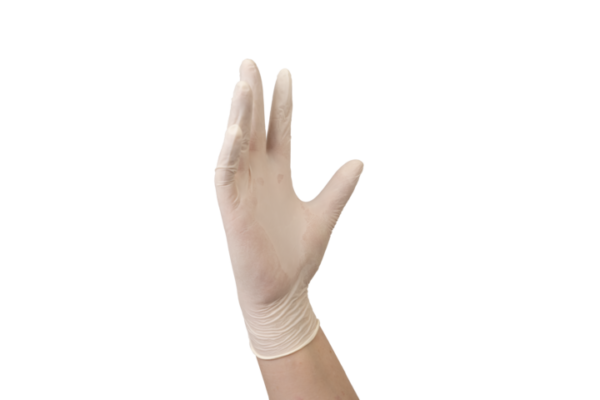

Our gloves
Our design and manufacturing processes are based on four key principles:
Choice of materials
A range of high-quality materials designed to meet a variety of protective needs, ensuring the glove’s durability.
Optimal use
Superior grip without compromising the glove’s flexibility, ensuring it adapts to the demands of a wide range of uses.
Superior comfort
Preserved tactile sensitivity, a second-skin feel to ensure excellent ease of movement in every action and every task.
Compliance
Our disposable gloves are manufactured in compliance with current medical device (MD) and/or personal protective equipment (PPE) and/or food contact standards.
We design and manufacture four types of gloves:
NITRILE GLOVES
Comfort & Feel: A ‘second-skin’ feel with a soft texture. A comfortable fit thanks to improved polymer technology, ensuring optimal dexterity in both wet and dry conditions.
Material & Allergy Information: Made from synthetic latex, an excellent alternative for those with a natural latex allergy.
PERFORMANCE & PRECISION
Textured fingers for a better grip
STRENGTH & DURABILITY
High resistance to punctures (3 times that of latex) and abrasion; mechanical strength, reducing excessive wear
PROTECTION
Protection against chemicals
COMPATIBILITY
Suitable for use with certain foods


LATEX GLOVES
Comfort & Feel: Highly flexible and elastic. Offers outstanding fit, comfort and dexterity.
Material & Safety: There is a risk of an allergic reaction in the event of prolonged, direct contact with the skin.
PERFORMANCE & PRECISION
Good grip thanks to its extreme sensitivity
STRENGTH & DURABILITY
Excellent mechanical resistance to tearing and creasing. Good abrasion resistance for greater durability
PROTECTION
Provides an effective barrier against biological contaminants
COMPATIBILITY
Suitable for use with certain foods
VINYL GLOVES
Comfort & Feel: A good, cost-effective alternative to latex and nitrile gloves for short-term use.
Material & Tolerance: Not suitable for prolonged contact with fats and oils in accordance with food contact standards.
Protection: Standard.
Performance: Excellent resistance to punctures, stretching and general wear and tear.


TPE GLOVES
The most economical option on the market.
Ideal for short-term use in the food industry.
FOOD CONTACT
The ‘food contact’ designation is a certification that guarantees the safety of materials and articles (including single-use gloves) intended to come into contact with food.
To be suitable for food contact, a disposable glove must comply with three different regulations:
Regulation (EC) No
1935/2004 General
requirements
Regulation (EU)
2023/2006 GMP
requirements
PLASTIC (VINYL)
Regulation (EU) No 10/2011
or
RUBBER (LATEX & NITRILE) French
Decree of 5 August 2020
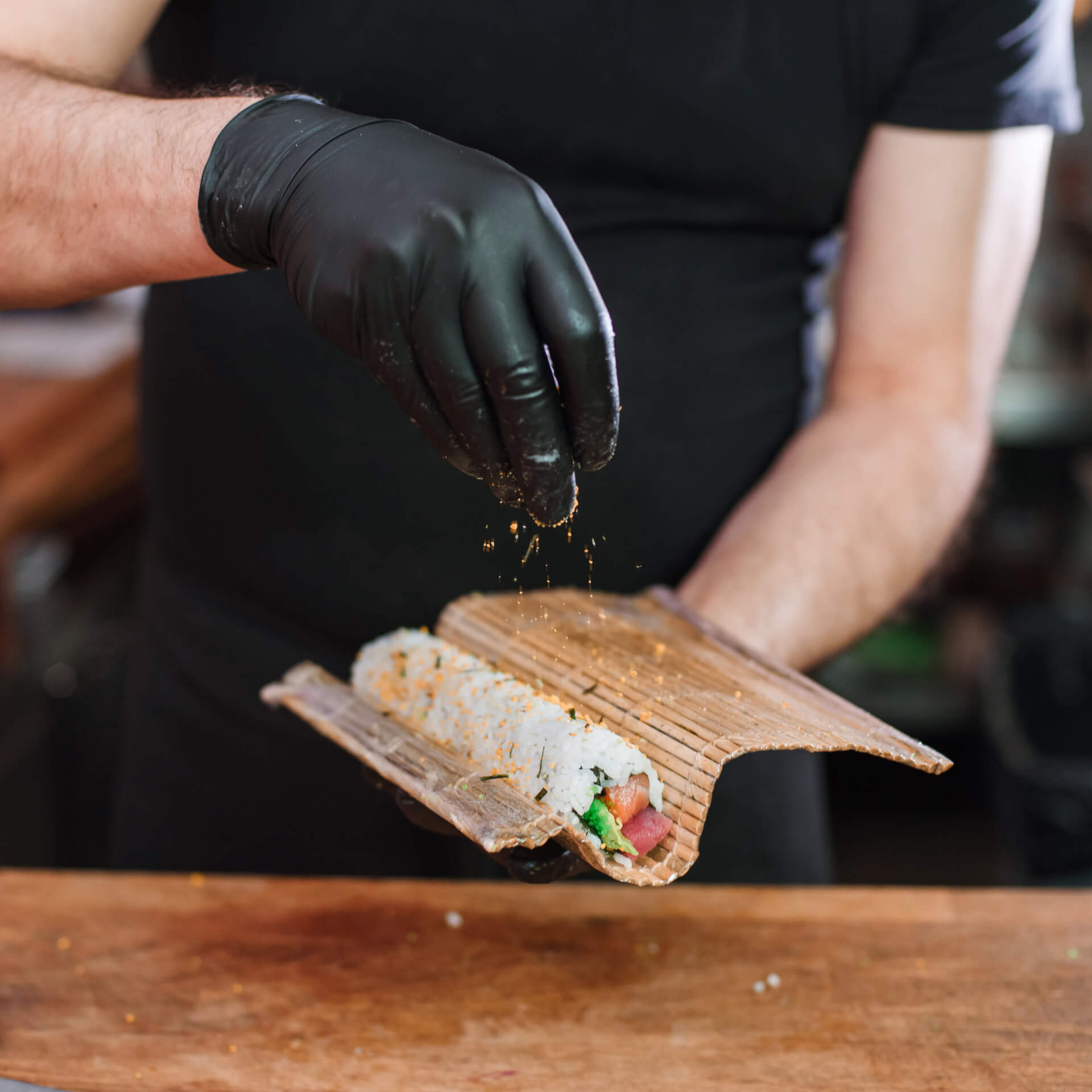
THE 3 MANDATORY REGULATIONS
European Regulation (EU) No. 1935/2004
The general requirements set out the principles of inertness and harmlessness.
The single-use glove must not be likely to: Pose a risk to human health.
To alter the composition of foodstuffs in an unacceptable manner.
Modify the organoleptic characteristics of foodstuffs (taste, appearance, colour, texture).
Sets out the requirements for labelling, the declaration of conformity and traceability.
Regulation (EC) No. 2023/2006
The Commission of 22 December 2006 sets out Good Manufacturing Practices, stating:
Quality assurance system.
Quality control system.
Documentation demonstrating the compliance and safety of the products.
Material Type
Depending on the type of materials:
Plastic (vinyl, PE and TPE gloves): Regulation (EU) No 10/2011 applies
Rubber (nitrile and latex gloves): National
regulations apply (NEW French decree of 5 August 2020)
The following must be stated:
The positive list of ingredients General migration tests (
stability) and specific migration tests (hazardous
substances) Additional tests in accordance with Regulation (EC) No 1935/2004 (organoleptic tests
and migration of restricted substances)
The recognisable food contact pictogram on the packaging:

The “glass and fork” symbol on the packaging indicates that the material is suitable for food contact and has successfully passed the relevant tests.