


CLEANROOMS
A clear guide to choosing the right PPE for your operations and risks.
One of the main sources of contamination in a cleanroom comes from the operator themselves: hair, skin particles and even breathing can compromise the controlled environment. Added to this are biological (microorganisms), chemical (solvents, powders) and electrostatic (ESD) risks, which can damage sensitive components.
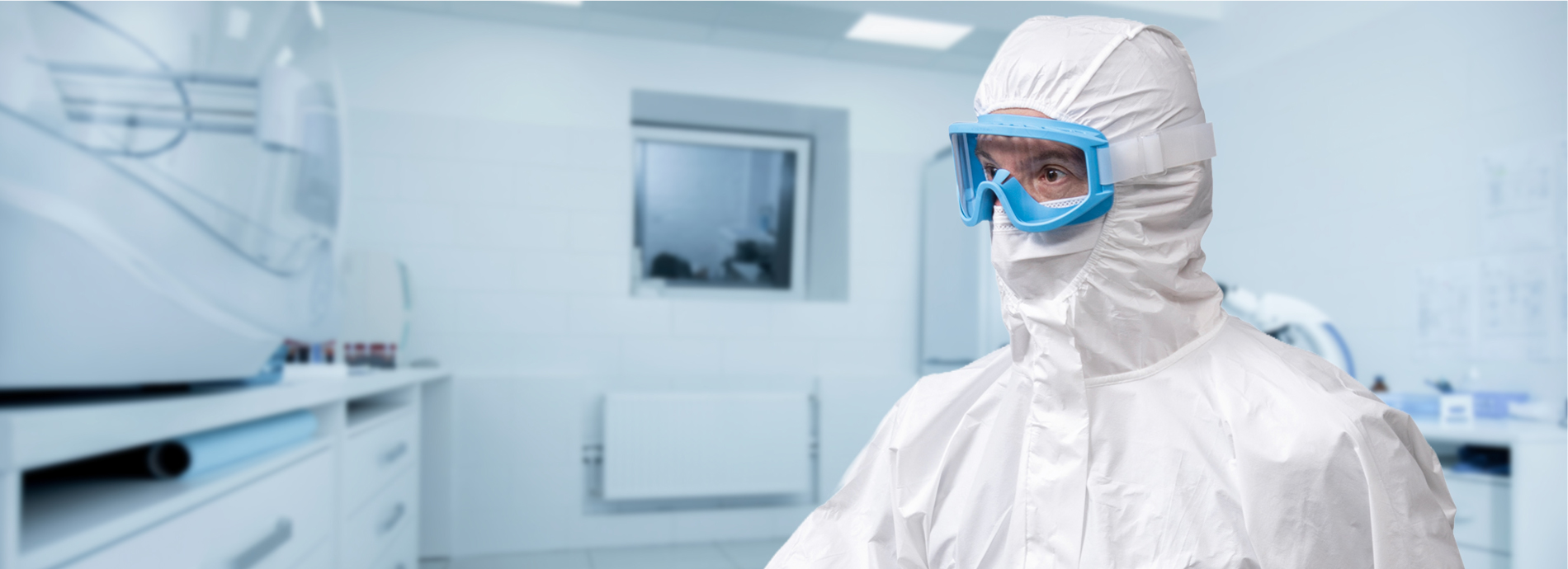
How do I navigate through all the available cleanroom PPE?
The most effective method involves cross-referencing
three parameters:
- the environment (ISO class or GMP/GMP-compliant area),
- operations (production, cleaning, maintenance, quality control),
- risks (particles, biological agents, chemical exposure, ESD).
QUICK SELECTION GUIDE
Table taken from the ASPEC guide “Cleanroom Attire” based on the recommendations IEST-RP-CC-003.5 & IEST-RP-CC-027.2 of ISO 14644-5 and the new Annex 1 of the GMP guidelines.
M = Mandatory | R = Recommended | AS = Application-specific | PA = Not suitable or only suitable to a limited extent
| Areas of activity | Pharmaceuticals, Healthcare, Medical Devices, Biotechnology, Cosmetics | Microelectronics, Space, Optics, Aeronautics | Food Industry | |||||||
|---|---|---|---|---|---|---|---|---|---|---|
| A/B | C/D | ISO 4 | ISO 4 / ISO 1 | ISO 5 | ISO 6 | ISO 7 | ISO 5 | ISO 7 | ISO 8 | |
| Underwear | O | O | R | R | R | AS | AS | R | AS | PA |
| Charlotte | O | AS | R | R | R | AS | AS | R | AS | AS |
| Cap | O | R | R | R | R | R | AS | R | AS | AS |
| Glasses / Goggles | O | AS | R | R | R | R | AS | R | AS | AS |
| Face mask | O | R | R | R | R | R | R | R | AS | AS |
| Blouse | PA | AS | PA | PA | PA | AS | R | PA | AS | R |
| Jumpsuit | O | AS | R | R | R | R | AS | R | AS | AS |
| Gloves | O | AS | R | R | R | R | R | R | R | AS |
| Overshoes | R | R | R | R | R | AS | AS | R | AS | AS |
| Over-boots | O | R | R | R | R | R | AS | R | AS | AS |
| Socks | O | R | R | AS | AS | AS | AS | R | AS | AS |
| Particle decontamination | O | O | O | O | O | O | R | O | R | R |
| Sterilisation | O | AS | AS | PA | PA | PA | PA | AS | PA | PA |
| Frequency of exchange | At each entrance | once a day | At each entrance | At each entrance | once a day | 3 times a week | twice a week | once a day | 3 times a week | twice a week |
WE ARE HERE TO PROTECT YOU
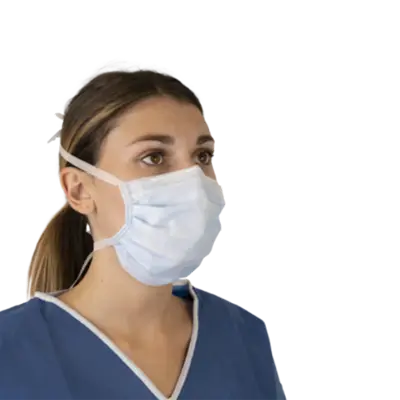
Head & face
In a cleanroom, head and face protection is the first line of defence against particle contamination. Hairnets, balaclavas and masks prevent hair, skin or breath from compromising the quality of the environment.
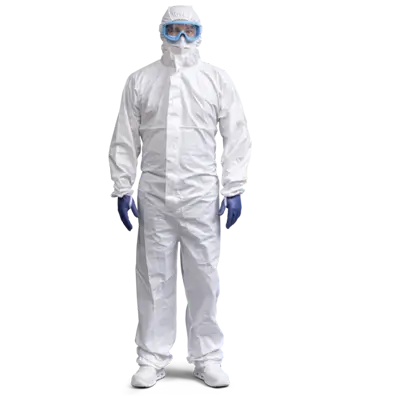
Body (cleanroom clothing)
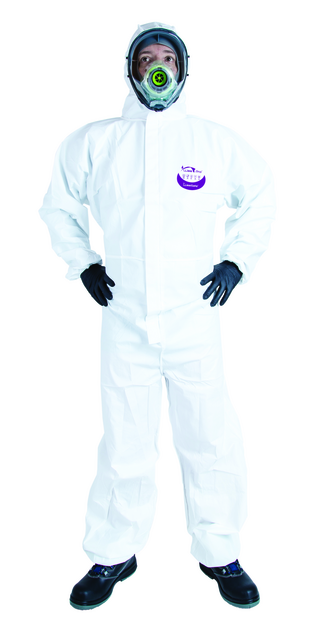
Clothing plays a vital role: it acts as a barrier against particles and contaminants, whilst remaining breathable and comfortable for the wearer. Medicom offers solutions suitable for ISO 4 to ISO 8 environments.

Hands (gloves & wrist warmers)
As hands are the primary point of contact with products, protecting them is essential. Medicom offers nitrile solutions, specialised polymers and sterile sleeves to meet the requirements of ISO 5 to 8 environments.
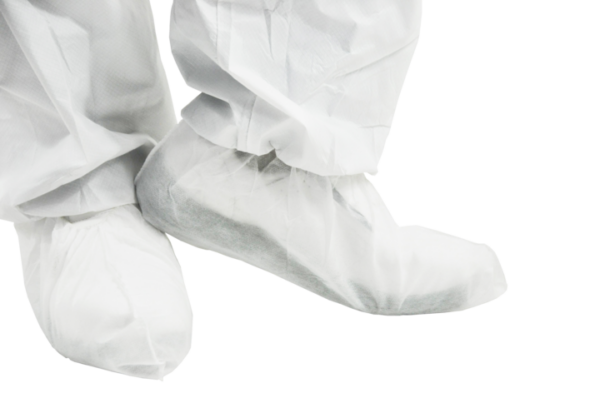
Feet
Footwear is one of the main sources of dust and particles. Medicom cleanroom overshoes provide an effective barrier whilst ensuring comfort and grip.
COMPLIANCE & EVIDENCE
Cleanroom safety does not depend solely on choosing the right product. It requires measurable evidence
: standardised testing, regulatory compliance and documented traceability.
Standards & practices
Medicom equipment complies with the main applicable standards:
- EN 1149-5: Electrostatic discharge (ESD)
- EN 13034 (Type 6) & EN ISO 13982-1 (Type 5) protection against limited liquid splashes and solid particles
- EN 14126: infectious agents
- ISO 16604: virus penetration
- EN 14683 & EN 149: performance of surgical masks and FFP masks
- IEST-RP-CC003.4: Helmke drum test, assessment of particle release
Tests & performance
- Helmke drum: measurement of particle release, correlated with ISO classes
- Body Box: simulation in an ISO 4 cleanroom to measure particles released during real-world movements
- Bioburden: assessment of the microbial load on products prior to sterilisation
- BFE* / PFE* / VFE* filtration: >99% efficiency on ISO AIR® masks, validated before and after sterilisation
- Traceability: double or triple packaging, sterilisation validated in accordance with ISO 11135 (ETO).
- Sustainable development
*BFE: Bacterial Filtration Efficiency
*PFE: Particles Filtration Efficiency
*VFE: Viral Filtration Efficiciency
Frequently Asked Questions
Thanks to our global network and manufacturing facilities, Medicom is uniquely positioned to meet the surging demand for personal protective equipment, even during crises such as global pandemics.
What PPE is essential to enter the cleanroom?
The standard protocol includes hairnets, cleanroom masks, coveralls, gloves, shoe covers and, depending on the level of risk, sometimes wristbands or ESD accessories.
What is the difference between sterile and non-sterile PPE?
Sterile versions undergo validated sterilisation (e.g. ETO in accordance with ISO 11135), with double or triple packaging. Non-sterile versions are used in areas with less stringent requirements (ISO 7–8).
How to avoid cross-contamination in a clean room?
By following the correct sequence for donning protective clothing (head covering > mask > undergarments > coveralls > gloves > overshoes) and using products with low particulate emissions that have been tested on the Helmke drum.
Can I store the sterile products for several months?
Yes, provided that you observe the use-by date stated on the packaging and the storage conditions (store in a dry place at room temperature, away from direct sunlight).