


Choose size
gloves
a practical and comprehensive guide

The size of gloves is not just a minor detail: it directly affects safety, precision of movement and even the lifespan of the equipment. A glove that is too tight constricts the hand, restricts movement and wears out quickly. Conversely, a glove that is too loose slips, hinders grip and creates potential hazards.
In other words, choosing the right size means protecting your hands and working with peace of mind.
At Medicom, a recognised expert in the manufacture of disposable gloves and PPE, we work with every professional to find the perfect fit.

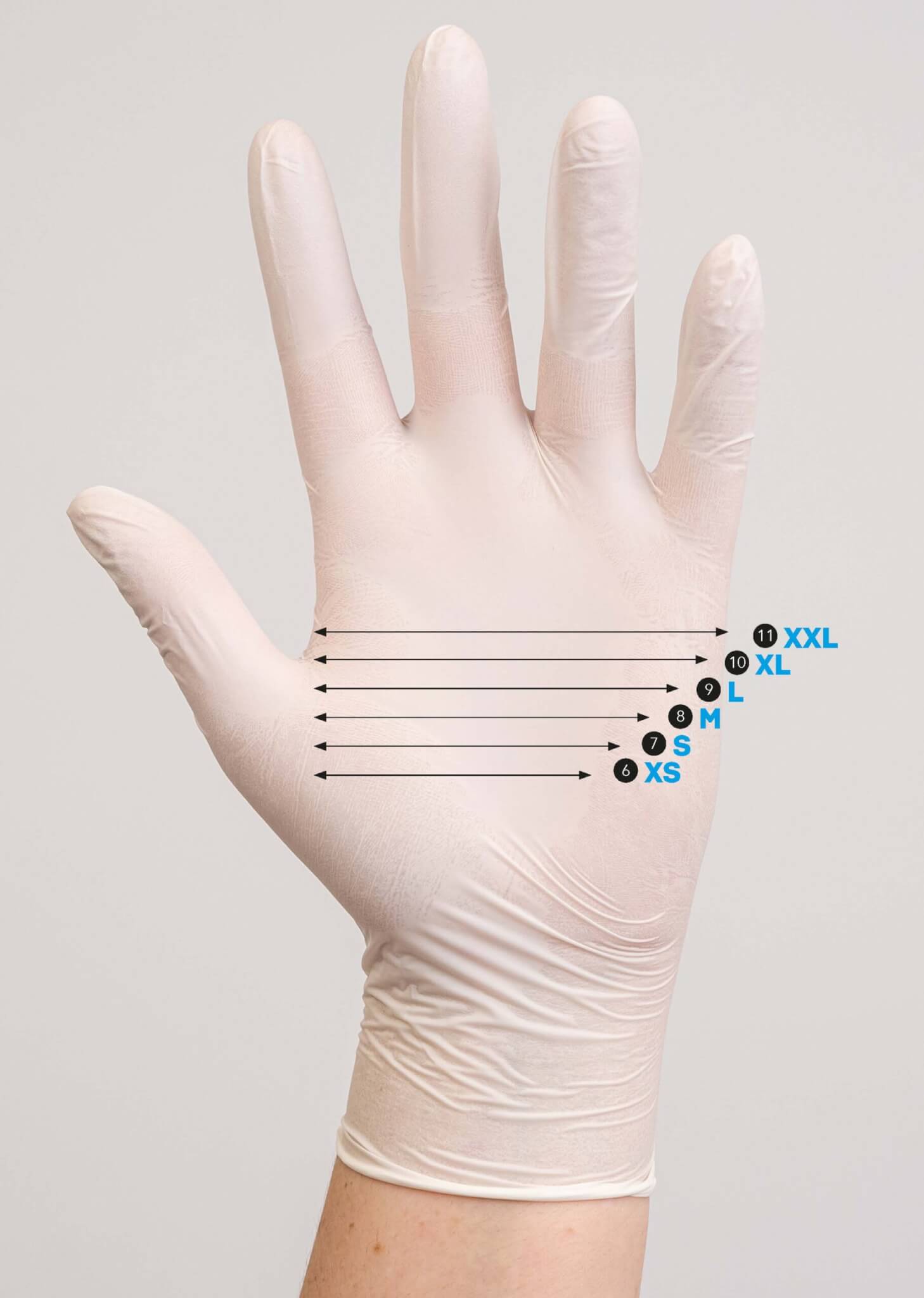
Why is it essential to wear the right size of gloves?
Hand safety depends directly on gloves fitting properly. If they are too small, they restrict blood flow and limit mobility; if they are too large, they slip and reduce dexterity. In both cases, the risk of accidents increases and efficiency drops. Conversely, a well-fitting glove acts like a second skin: it protects, ensures comfort and extends its lifespan. A detail that makes all the difference.
| Size | Wrist circumference (cm) | Equivalent |
|---|---|---|
| XS | 15–17 | 6 |
| S | 17–19 | 7 |
| M | 19–22 | 8 |
| L | 22–24 | 9 |
| XL | 24–27 | 10 |
| XXL | 27–30 | 11–12 |
How do you measure your hand?
Method 1: measuring the circumference of your hand
Take a tape measure and choose your dominant hand (right if you are right-handed, left if you are left-handed). Wrap the tape around the palm, just below the knuckles, without including the thumb. Keep your hand slightly closed to get a realistic measurement. The figure recorded in centimetres corresponds directly to a glove size in the table above.
A quick and reliable method.
Method 2: Hand width and length
This method complements the previous one and provides greater accuracy, particularly for tasks requiring a high degree of dexterity. First measure the width of your palm, then the length of your middle finger. Add these two measurements together and divide the total by two: the result is your glove size. For example, a palm width of 9 cm and a middle finger length of 8 cm give a size of 8.5, or M.
A simple calculation for a perfect fit.


Choosing the right sizes
for your teams
For a procurement manager or HSE department, ordering gloves in bulk means carefully planning the size breakdown within the teams.
The best approach is to carry out a sample survey: measure a representative group of employees to obtain a realistic size distribution (for example, 20% S, 50% M, 25% L, 5% XL). This approach reduces the risk of overstocking sizes that are rarely used and ensures that everyone has a glove that fits perfectly.
Medicom supports its B2B clients with personalised advice and solutions tailored to large organisations.
Choose the right size for the intended use
A glove’s size is not just a matter of a single number: it must also be suited to the context in which it is used.
In the medical field, a precise fit ensures both hygiene and dexterity during technical procedures.
In industry or the food sector, a glove that is too big can compromise grip, whilst a glove that is too small will tear more quickly.
In chemistry, a correct fit ensures a tight seal and prevents any leakage.
Finally, for precision handling, a close-fitting cut acts like a second skin.
Every sector has its own requirements, but the rule remains the same: a well-chosen glove is an effective glove.


Standards you need to know
for a reliable glove
A well-fitting glove must also comply with European standards. The EN ISO 21420:2020+A1:2024 standard sets out the general requirements and test methods applicable to all personal protective gloves, whilst the EN 455 series of standards applies to medical gloves.
FAQ on glove sizes
What should I do if I’m between sizes?
In that case, it’s best to go for the next size up: the glove will remain comfortable and won’t restrict your movements.
Do sizes vary between brands?
Yes, just like with clothes. Some brands run slightly larger or smaller. That’s why it’s essential to check the size guide provided by the manufacturer.
Do I need to measure my hand every time I make a purchase?
Not necessarily. Once you know your size, it stays the same, unless you change the type of gloves or the material.


French manufacturer
of medical devices and PPE
To find out more, explore the Medicom range or request a personalised quote. An informed choice means optimal protection.